
The Invisible Hand Meets the Internal Point of View: The Strange Mish-Mash of Law & Economics
Posted by Jeff Lipshaw
Richard Posner published an eminently sensible analysis of the bursting of the credit bubble in the Wall Street Journal the other day (a prelude, I assume, to his new book, The Failure of Capitalism, which he no doubt wrote in a couple nights of intense work). I’m not sure what’s going on in his thinking, but the virtue 

The image that comes to mind is that game in which you start with one word, and by changing it one letter at a time into a series of different words, you finally end up at a word that is the opposite of, or an ironic twist on, the original word. Remember what Adam Smith’s invisible hand was? The wealth of nations comes about from individual 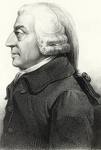
Here’s my Kuhnian thesis. About a hundred years ago, the dominant philosophy of science was logical positivism. (This was the Vienna Circle.) The idea was that only the observable had any meaning at all – metaphysics was meaningless, including any attempt to posit a priori concepts like causation in the explanation of the world. In other words, the only appropriate tools in the scientific tool box were observations of regularities, and the use of deductive logic. The logical positivists viewed any attempt to explain one event in terms of another by way of “causation,” for example, as without meaning. From this basis, Carl Hempel developed his “covering laws” thesis, Popper rejected the verification principle in favor of falsification, and so on. The point is that philosophers of science were rejecting Kantian metaphysics in favor of a strict empiricism. What we want to do is identify the regularities, not try to explain why they are occurring.
I don’t think it’s a coincidence that the concepts of legal positivism were developing at about the same time. Hans Kelsen developed his “Pure Theory of Law” to identify positive law, but it turned on neo-Kantian metaphysics expressed in the fundamental Grundnorm, an a priori concept (i.e., one accessible to us merely by reason, and preceding our experience of the world) by which physical events took on legal consequence. H.L.A. Hart’s positivism put aside the metaphysics, but substituted the Rule of Recognition, and the “internal point of view.” That’s the key move: the melding of the objective and observable (i.e., positive) with the subjective and internal. Note the paradox that is now simply ignored. We observe people stopping at red lights and going on green lights, but that only tells us there’s a norm. What makes it law, objectively and positively, is the subjective view of the individual from the internal point of view – the placement of the traffic light traces back to a “Rule of Recognition” by which the subjective actor recognizes the light has having the force of law.
So, economics is a science in the logical positivist tradition. It ought not try to speculate why things are happening, but to explain or predict regularities. If marginal costs exceed marginal revenues, generally the firm will shut down production. If interest rates go down, generally demand for houses will go up. The explanation of law, on the other hand, in the positivist tradition at least, demands that we look at the internal point of view; otherwise we may be studying norms and not law. Note again that there is a metaphysical paradox that Hartian legal positivism just doesn’t contemplate. The incremental result of combining the two – the external point of view of economics and the internal point of view of law – is the mish-mash in which, against all intuitive good sense, the theory demands (see Schwartz and Scott or Gilson as evidence) individual actors incorporate the external point of view in their internal motivations!
To me, reading these accounts of motivation is as strange as if reading a theorist in quantum mechanics who felt obliged to explain the individual motivations of the electrons versus merely predicting where they’d be.