
Why Overly Analytical Law Professor Blog Editors Need to Do a Better Job Suspending their Disbelief
Samuel Taylor Coleridge (right) articulated that state of mind that is necessary for us to enjoy any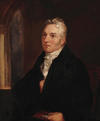 fiction: the willing suspension of disbelief. The ultimate consequence of the failure to suspend belief, which of course caused all the male viewers not to be able to suspend theirs (as it merely accentuated the general lameness of the plot), while their dates or s
 pouses were weeping uncontrollably, was in the ultimate chick flick, Somewhere in Time, when Christopher Reeve, having successfully willed himself back to 1912 to meet Jane Seymour, sees the present date on a penny and comes back to reality. Hum to yourself Rachmaninoff’s Rhapsody on a Theme of Paganini as you read this. (Bit of name-dropping trivia. One of the supporting actors in Somewhere in Time was Teresa Wright, left, who won an Academy Award in the early forties in Mrs. Miniver, and played Peggy, Al’s daughter in The Best Years of Our Lives. She passed away not too long ago. I have a DVD of Best Years autographed by her, because her grand-daughter lives here in Indianapolis, and was a schoolmate of one of my children.)
But I digress. Note that what follows ought not be a plot-spoiler, but it may cause you also to fail to suspend your disbelief. We rented the DVD of the latest James Bond movie, Casino Royale, and I’m about 40 minutes into it. While I like the hard edge very much – Daniel Craig has more charisma in the role than anyone since Sean Connery – a bit of dialogue at the very beginning took me right out of my suspension at least until the next big chase scene. The main villain, Le Chiffre, is in Uganda taking several suitcases full of cash to bank on behalf of a local “freedom fighter.” Here is the dialogue:
Freedom Fighter: Do you believe in God, Mr. Le Chiffre?
Le Chiffre: No, I believe in a reasonable rate of return.
Freedom Fighter: I want no risk in the portfolio.
In an instantaneous analysis worthy of Paul Caron himself (or perhaps Kate Litvak or Larry Ribstein), I thought “how can he get a reasonable rate of return and have no risk in the portfolio?” Then I had a flash image of the slides Alan Palmiter (Wake Forest) uses to explain return on investment to his Securities Regulation classes, and particularly the one about stashing cash in a mattress. Then I wondered why the freedom fighter didn’t just buy T-bills from a Swiss bank account, and if he wanted no risk in the portfolio why was he giving the money to a guy I know James Bond is going to kill by the end of the movie. But by then we had moved on to Madagascar, and bigger and better things.
[Jeff Lipshaw]