
Plaintiffs’ Lawyers or Trial Lawyers?
Posted by Jeff Lipshaw
 At the risk having of having me provoking tort and employment lawyers into doing for our page hit statistics what Alan managed with the tattoo gemeinschaft, I am going to make an observation from many years of big firm practice on Bill Henderson’s intriguing hypothesis about the educational pedigree of big-time plaintiffs’ lawyers and big firm lawyers. Alan has already commented below, and Bill’s post is getting lots of blog play at sites like MoneyLaw and Concurring Opinions.
Here’s a hypothesis. Go down the lists of big regional firms, not the mega-firms based on the coasts (I’m thinking firms like my old firm – Dykema Gossett in Detroit, and its comparable firms in other midwestern cities, Thompson Coburn in St. Louis, Reed Smith in Pittsburgh, Ice Miller or Baker & Daniels in Indianapolis, and the like). I am willing to bet that if you compare the schools of lawyers describing what they do as tort or employment litigation to everyone else, you will see a similar split pattern of educational pedigree.
This is not in any way to disparage the complexity of tort or employment law. But TRYING tort and employment cases is, frankly, less an intellectual and more an emotional quotient game. I angered an academic colleague some time back by making this comparison, but if you take the standard jury instruction on negligence across the country, it doesn’t vary by five words (that may be hyperbole, but not much), whereas the standard instructions on consideration, where they exist at all, are all over the lot. This is not to diminish the particular skills it takes to be a great personal injury lawyer. But the reality is that you are generally laying the factual story onto an off-the-shelf, pre-packaged “law.”
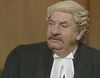
My all-time favorite fictional character, the Old Bailey hack Horace Rumpole (above), the world’s cleverest and most ferocious cross-examiner, the barrister who never let a client plead guilty, who trumpeted the golden thread of British justice, said over and over again he, like most great trial lawyers, had no particular use or calling for the “law.”